

The Entrepreneur’s Transition Curve: Why Every Founder Feels the Highs, the Lows and What to Do About It
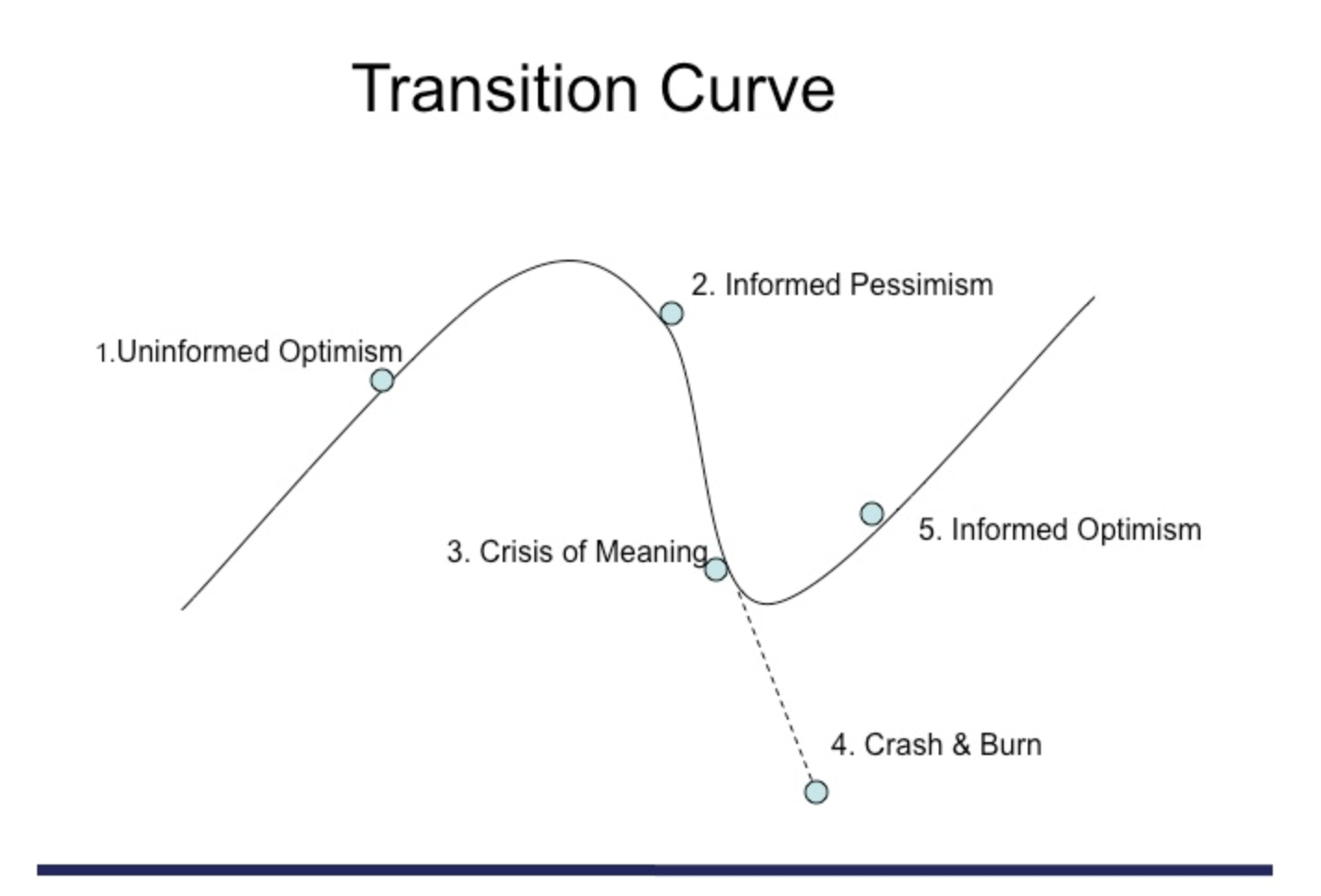
“Transition Curve” is derived from the Emotional Cycle of Change, originally developed in the 1970s by Don Kelley and Daryl Conner.
Entrepreneurship is often romanticized as freedom, innovation, and limitless upside.
What is discussed far less is the emotional volatility that accompanies building something from nothing.
At Libiano Partners, we’ve observed a consistent pattern across founders whether they are at idea stage, early traction, or scaling revenue. The experience may vary in intensity, but the emotional arc is remarkably similar.
That arc is known as the Emotional Cycle of Change, originally developed in the 1970s by Don Kelley and Daryl Conner. The model was created to explain how individuals psychologically respond to major change. Over time, it has been adapted within entrepreneurial and leadership circles to reflect the lived reality of building a company.
When applied to entrepreneurship, this pattern is often referred to as the Transition Curve.
Understanding this curve does not eliminate difficulty. But it does replace confusion with clarity.
And clarity changes outcomes.
Stage One: Uninformed Optimism
Every venture begins with energy.
The idea feels right. The opportunity feels real. Momentum builds quickly because belief comes easily when nothing has yet contradicted it.
In this stage, founders are decisive, bold, and willing to work relentlessly. This optimism is necessary because it fuels action.
But it is also incomplete.
At this point, most assumptions remain untested. Market behavior, customer acquisition costs, operational friction, and capital constraints are still abstract concepts.
This is where many founders overbuild. They scale branding before validating demand. They hire before stabilizing cash flow. They invest heavily before proving repeatability.
The solution here is not to suppress enthusiasm it is to discipline it.
What to do in this stage:
Validate directly with customers every week.
Anchor progress to one measurable metric.
Avoid long-term commitments until short-term signals are proven.
Optimism is powerful.
But disciplined optimism builds companies.
Stage Two: Informed Pessimism
Reality arrives.
Customer acquisition is slower than projected. Operational costs are higher. Partnerships take longer. Investors ask harder questions.
Confidence dips not because the founder is incapable, but because the market has begun responding honestly.
This stage feels uncomfortable, but it is actually progress. You are no longer operating on assumptions; you are operating on feedback.
The danger here is fragmentation. Founders begin chasing multiple solutions at once. They pivot too quickly. They abandon working strategies before giving them enough time to compound.
Informed pessimism is not failure, it is recalibration.
What to do in this stage:
Rank problems by financial impact.
Eliminate low-return activities.
Seek external perspective to avoid emotional overcorrection.
Many companies quietly stabilize here if the founder resists reactive decision-making.
Stage Three: Crisis of Meaning
This is the lowest emotional point on the curve.
Energy drops. Doubt grows louder. The original vision feels distant.
Founders begin asking harder internal questions:
Is this worth it?
Am I capable of leading this?
Should I walk away?
This stage is often misinterpreted as a signal to quit. In reality, it is often a signal to refine.
You now understand the business more clearly than ever before. You see weaknesses, inefficiencies, and misalignment. The question becomes whether those are fixable or foundational flaws.
Emotionally driven decisions are most dangerous here.
What to do in this stage:
Reduce goals to short, achievable milestones.
Review actual performance data before making major changes.
Reconnect to the core problem your business solves.
Founders who move through this stage strategically emerge stronger, more focused, and more realistic.
Stage Four: Crash & Burn (An Outcome, Not a Guarantee)
Not every venture survives.
Sometimes capital runs out. Sometimes markets shift. Sometimes timing is wrong.
Crash & Burn is not an inevitable stage, it is a possible one.
Handled poorly, it damages confidence and reputation.
Handled intentionally, it becomes one of the most valuable professional learning experiences available.
If you land here:
Conduct a structured post-mortem.
Preserve relationships and goodwill.
Document lessons before moving on.
Many successful founders have stood in this stage before their most successful venture.
Stage Five: Informed Optimism
If you continue, something shifts.
Confidence returns, but it is different. It is no longer fueled by excitement alone. It is grounded in experience, tested systems, and market validation.
You understand your numbers. You understand your customer. You understand your limitations.
This is informed optimism.
The danger now is scaling too quickly because confidence has returned.
Growth without infrastructure recreates the early volatility.
What to do in this stage:
Standardize processes.
Build operational buffers.
Scale deliberately, not emotionally.
This is where sustainable companies are built.
Why This Framework Matters
Entrepreneurs rarely fail because they encounter difficulty.
They fail because they misinterpret difficulty.
Without context, the Crisis of Meaning feels like personal inadequacy.
Informed Pessimism feels like collapse.
Normal volatility feels like structural failure.
The Transition Curve provides context.
It allows founders to say:
“I am here. This stage has characteristics. These actions are appropriate.”
That clarity prevents unnecessary exits, reckless pivots, and burnout.
How Libiano Partners Engages With This Curve
At Libiano Partners, we do not simply analyze financial statements or market positioning.
We assess stage alignment.
We help founders identify:
Where they are emotionally and operationally.
Which decisions are appropriate for that stage.
What systems are needed to progress to the next phase.
Entrepreneurship will always involve uncertainty.
But uncertainty navigated with structure becomes strategy.
Final Thoughts
The goal is not to avoid the curve.
The goal is to recognize it, move through it deliberately, and avoid making permanent decisions during temporary stages.
If you are currently in a high, build wisely.
If you are in the valley, stabilize strategically.
If you are scaling, strengthen infrastructure.
Knowing where you stand changes how you move.
And how you move determines whether the venture survives the cycle or rises because of it.
